Every job below is one we do ourselves across San Mateo.
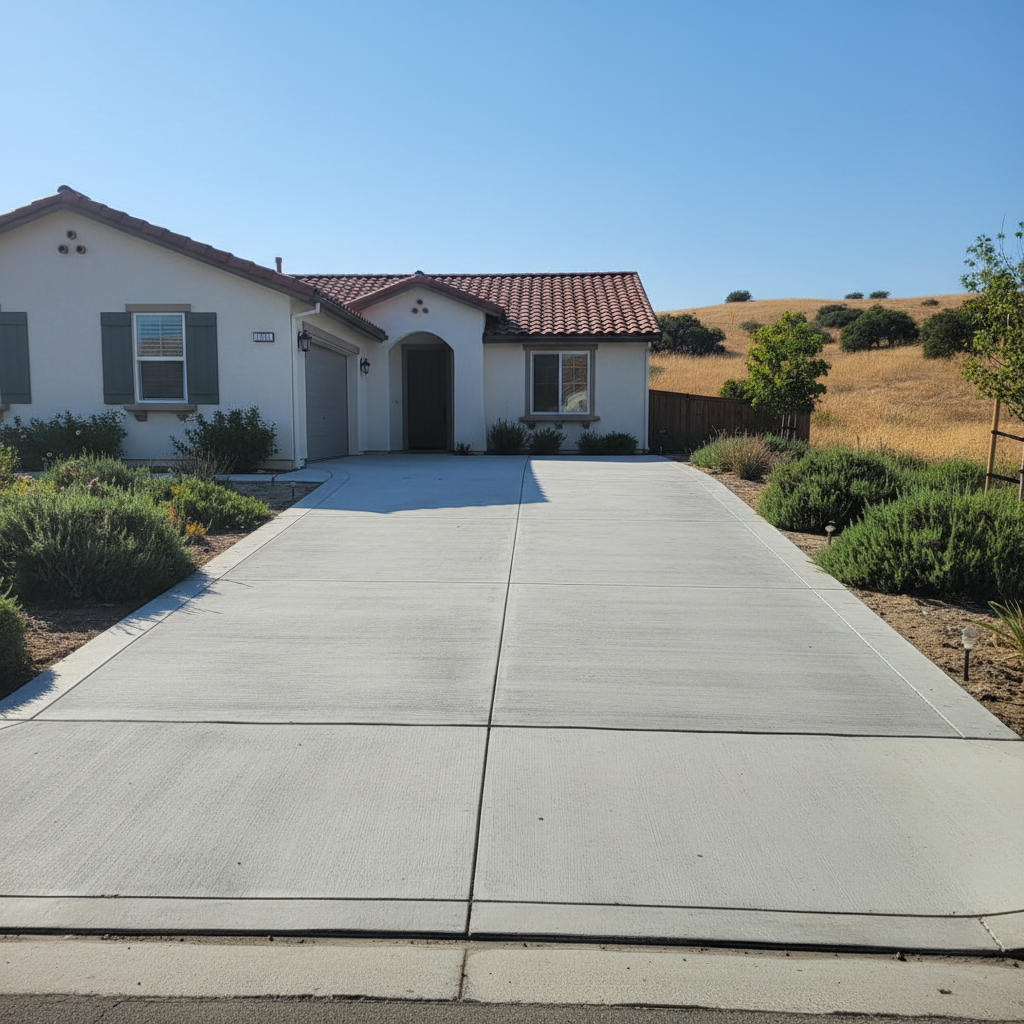
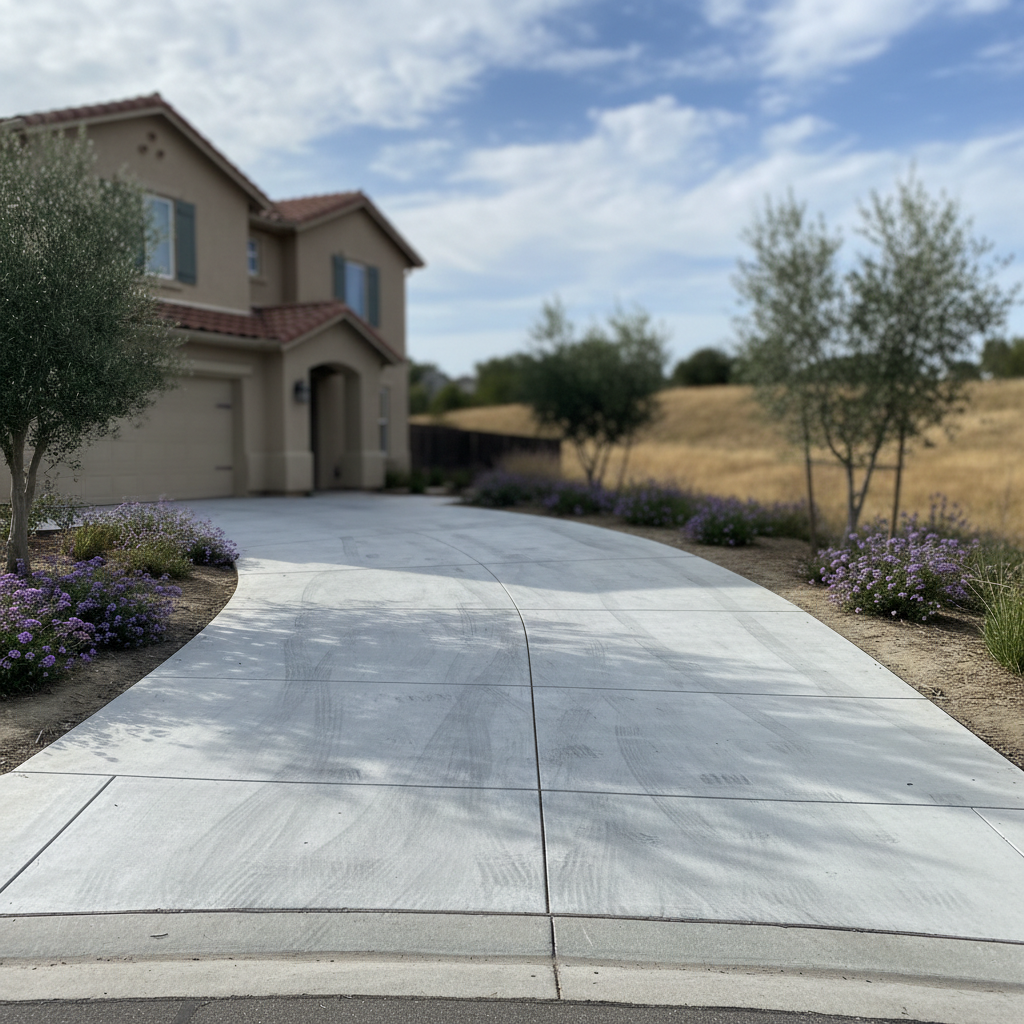
A driveway slab takes the weight of your car every day, so we run rebar on 18-inch centers instead of wire mesh, which sags to the bottom of the pour and does nothing once it's there. We grade and compact the base rock first, because a driveway that cracks almost always failed underneath before the concrete ever showed it. Expect four to five days of cure time before you park on it, seven before anything heavier.
Patios don't carry car loads, but they still move with the clay soil under them, so we set control joints every 8 to 10 feet to tell the slab where to crack instead of leaving it to guess. We can finish it broomed, troweled smooth, or with a light exposed aggregate for texture underfoot. Most patio pours are ready to walk on in 24 to 48 hours.
Stamped concrete gets you the look of flagstone, slate, or brick without the joints that weeds and ants love in a paver patio. We color it with integral pigment mixed into the batch, then a release agent dusted on before stamping, which is what gives it depth instead of looking flat. Sealing it every two to three years keeps the color from chalking out in the sun.
Not every cracked slab needs to be torn out. Hairline cracks under a quarter inch we route and fill, slabs that have settled we can sometimes mudjack or foam-lift back level, and spalled or flaking surfaces usually mean the original mix had too much water in it. We'll tell you straight if a section is too far gone to patch and actually needs replacing.
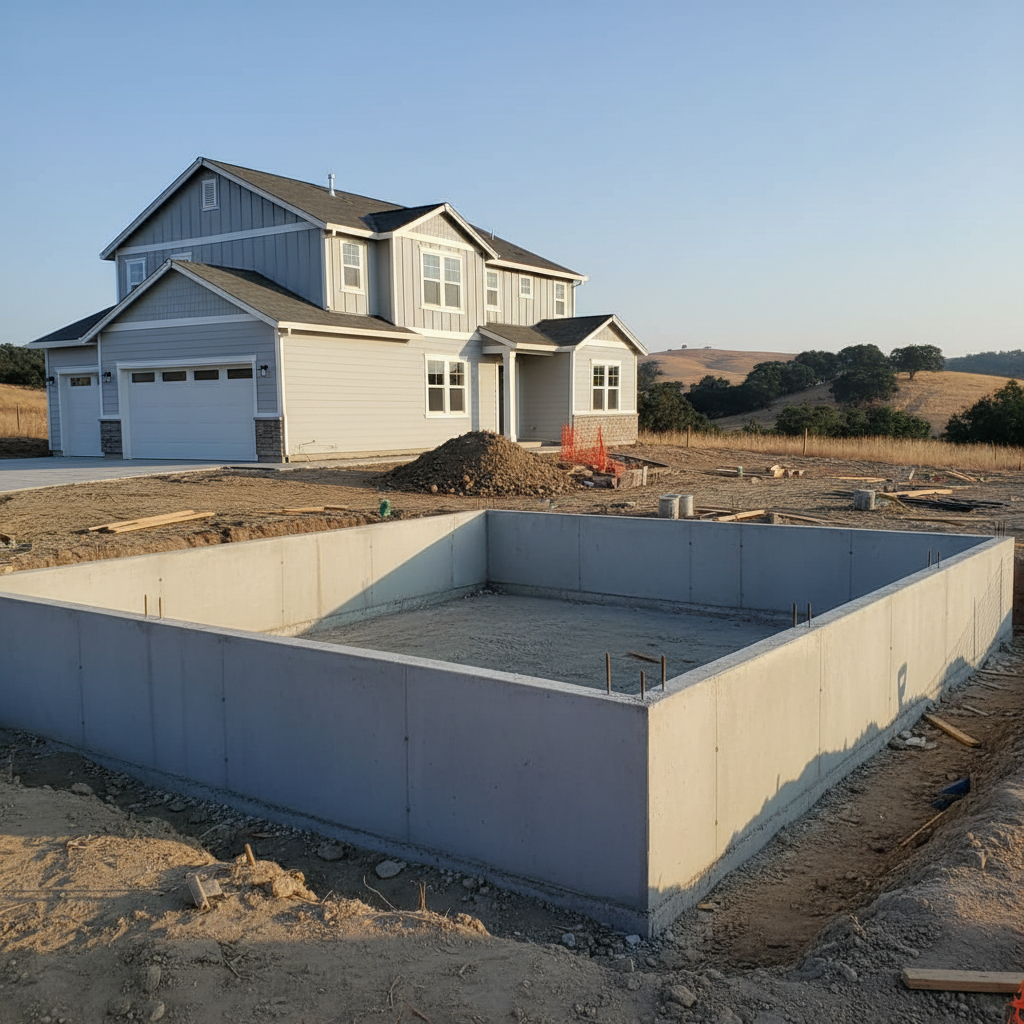
Garage slabs, shed pads, and equipment pads, we build them to carry the load they're actually going to see. Base compaction and rebar sizing depend on that load, and we'll add a vapor barrier underneath if moisture rising through the slab would be a problem for whatever sits on top.
Steps have to meet code on rise and run or they become a trip hazard, and we check that before a form ever goes in the ground. Walkways get the same control joints as any other flatwork, spaced so the slab doesn't pick its own crack line across the middle of a step.
A retaining wall is holding back wet soil, so drainage matters more than the concrete does. We put in weep holes or a perforated drain pipe behind the wall and backfill with gravel, because a wall that traps water behind it is a wall that's going to lean or crack.
Exposed aggregate patios and walkways show off the stone in the mix instead of burying it under a trowel finish. We wash the surface at the right window after the pour, too early and the stone washes loose, too late and it won't expose at all. It also holds up better barefoot than a smooth troweled finish when wet.
Old driveways, patios, and slabs have to come out before anything new goes in, and we haul it off rather than leaving a dumpster sitting in your yard for two weeks. We also check what's underneath, old tree roots and bad base material are usually why the original slab failed in the first place.
If a slab is structurally sound but looks beat up, pitted, stained, cracked at the surface, an overlay can give it a new face for less than a full tear-out costs. It's not a fix for a slab that's actively settling or heaving though, an overlay just hides that problem for a while before it telegraphs back through.
Four steps, and no surprises in any of them.
You tell us what you want doing, we look at what is actually there, and we ask the awkward questions early.
In writing, itemised, free. If something might add cost later we flag it now rather than at the end.
Same crew throughout. We cover your floors, keep the dust down and tidy up before we leave each day.
You point out anything you are not happy with and we fix it before the invoice, not after.
These are the cities where we're regularly out pouring and repairing concrete.
Questions that come up once a project is actually underway.
Describe the problem and we will tell you what it probably is. No obligation.